Washing Without Scratching the Paint
Nearly all the fine scratching on a typical car was installed during washing and drying. It is entirely avoidable.
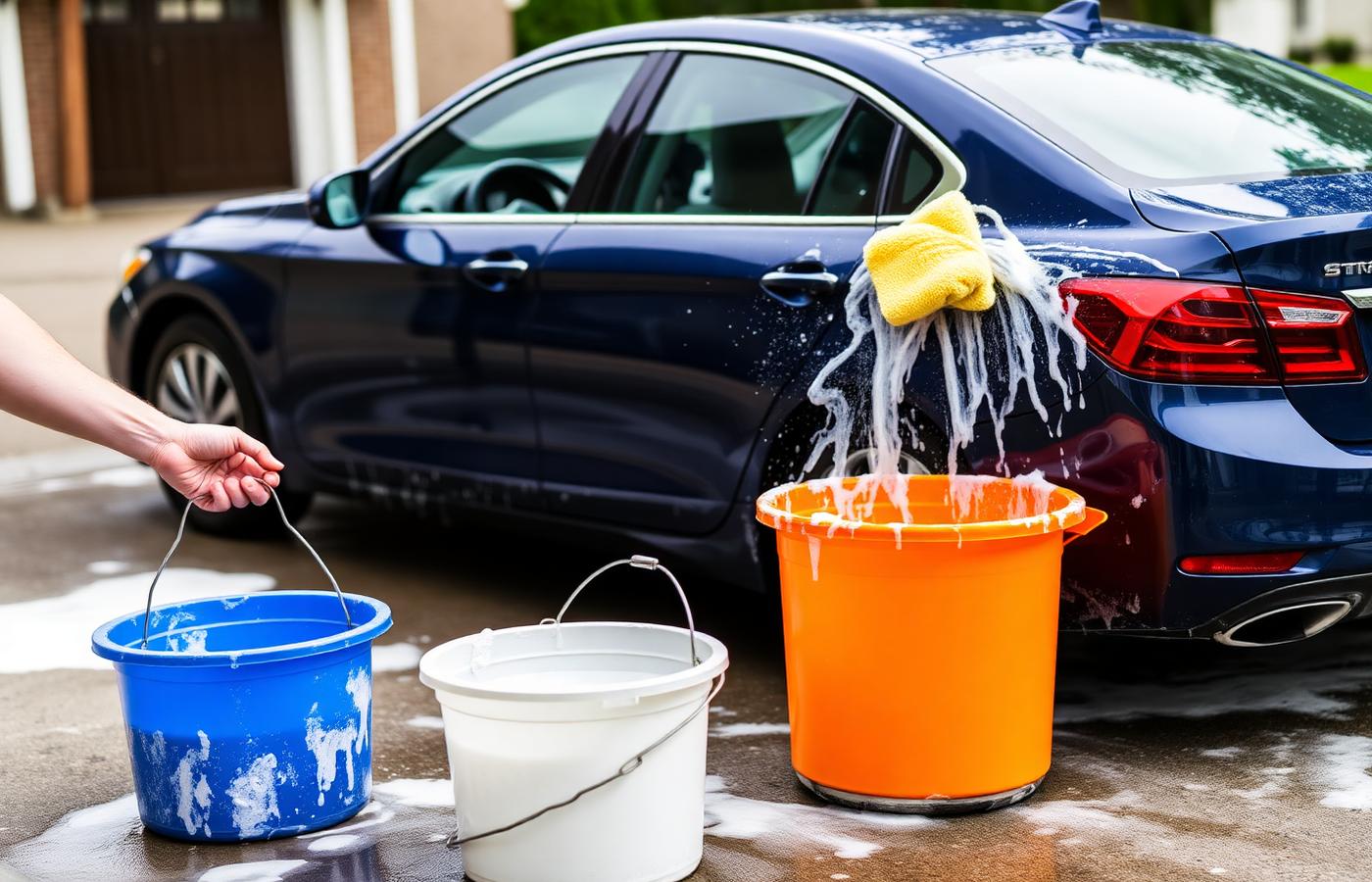
Why washing scratches paint
Dirt on a car is largely abrasive grit. Dragging a wash mitt across a panel drags that grit with it, and each pass leaves fine scratches. Do this weekly for years and you get the spiderweb of swirl marks visible under direct sun — the reason dark cars look hazy rather than glossy.
The solution is not to wash less. It is to keep grit off the mitt and off the paint.
The method
- **Rinse thoroughly first.** Remove as much loose grit as possible before anything touches the paint.
- **Pre-foam if you can.** Foam lifts and suspends dirt so it rinses away rather than being wiped off.
- **Two buckets, both with grit guards.** One with shampoo, one with clean rinse water. Rinse the mitt after every panel.
- **Top down.** Lower panels are dirtiest; do them last and consider a separate mitt for them.
- **Straight lines, no circles.** Straight-line marring is far less visible than circular.
- **Separate tools for wheels.** Brake dust is the most abrasive material on the car and must never reach the paint.
Drying is where most damage happens
A dirty or low-quality drying towel scratches more effectively than the wash itself. Use a large, clean, plush microfibre drying towel and pat or lay-and-drag rather than scrubbing. Filtered forced air is better still, especially around trim and mirrors where water hides and later runs out onto dry paint.
In San Antonio, drying is not optional. Hard water evaporating on a hot panel leaves mineral deposits that eventually need polishing to remove. Wash early in the morning, in shade, and dry as you go rather than washing the whole car first.
Automatic washes
Brush and cloth tunnel washes use media that has just been dragged over dozens of dirty vehicles. They are the fastest way to install swirl marks. Touchless washes do not touch the paint, but rely on strong chemicals that strip wax and sealant, so they are a compromise rather than a solution.
If a tunnel wash is the only realistic option in your week, choose touchless, and plan on correction eventually.
What protection contributes
A waxed, sealed or coated surface is slicker, so dirt bonds less strongly and releases with less agitation. Less agitation means less marring. Protection does not stop scratches, but it meaningfully reduces how much force washing requires.
Common questions
- Are foam cannons worth it?
Yes. Lifting dirt chemically before contact is one of the highest-value steps in a safe wash.
- Can I use dish soap?
No. It strips protection and is harsh on trim and rubber. Use automotive shampoo.
- Is a rinseless wash safe?
On a lightly soiled car, yes, with plenty of clean media. On a genuinely dirty car, rinse first.
Keep reading
Would you rather we handled it?
We detail vehicles at homes and workplaces across San Antonio, seven days most weeks.