Ceramic Coating in San Antonio
A semi-permanent protective layer over properly prepared paint — strongly hydrophobic, UV-stable and easier to wash, but not a shield against physical damage.
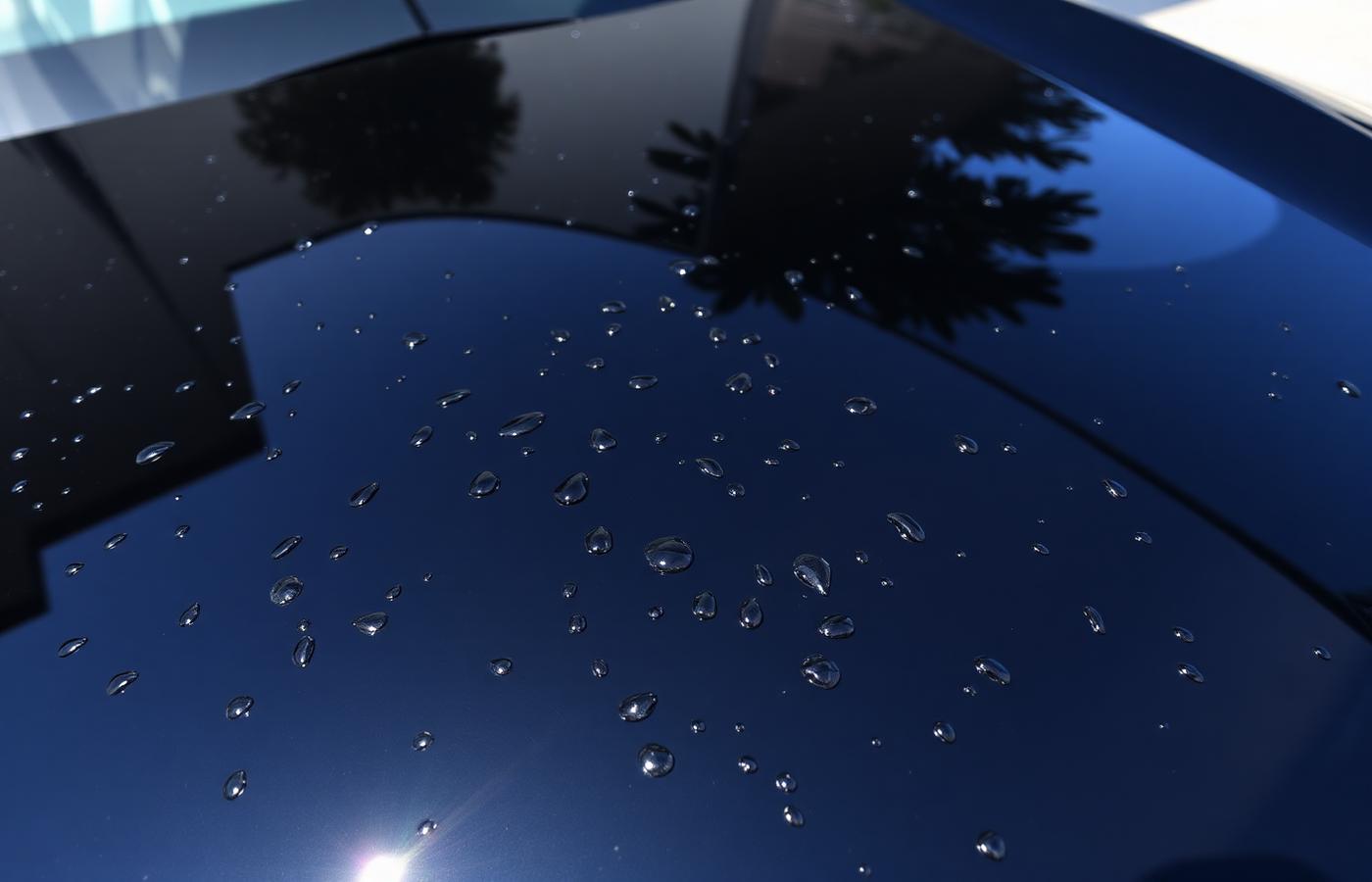
What a ceramic coating actually does
A ceramic coating is a liquid polymer that cures into a hard, transparent, chemically bonded layer over the clear coat. Once cured it is not a wax sitting on top of the paint; it becomes part of the surface the world touches.
The practical effects are consistent. Water sheets and beads instead of clinging, which means less dwell time for the minerals in hard water. Dust, pollen and road film release with far less agitation, so washing takes less time and imparts fewer wash marks. Resistance to chemical etching from bug residue, bird droppings and tree sap improves substantially, buying hours or days of tolerance rather than minutes. Gloss and color depth hold for years instead of months, and the coating itself is UV-stable in a way a carnauba wax is not.
In a climate where sustained ultraviolet exposure and high surface temperatures are the norm for much of the year, that UV stability is the single most valuable property for most owners here.
What a ceramic coating does not do
It is not a scratch-proof shell. A coating adds hardness at a microscopic scale, and it resists the fine marring caused by careless washing, but it will not stop rock chips, shopping cart contact, key marks or a branch scraping down a door. Anyone selling a coating as scratch protection is overselling it.
It is not self-cleaning. Coated cars get dirty. They simply get clean more easily. Skip washing for two months in pollen season and a coated car looks like any other neglected car.
It is not a repair. A coating is transparent and preserves the surface underneath, including swirl marks and oxidation. It also does not eliminate water spotting — a coated panel left to dry in the sun with hard water on it can still leave mineral deposits on top of the coating.
Preparation determines the result
Almost everything that goes wrong with a coating traces back to preparation. The surface has to be genuinely clean, decontaminated and defect-free before anything is applied, because whatever is present at that moment gets locked in.
Preparation typically runs: a thorough hand wash, chemical decontamination to dissolve bonded iron and tar, clay treatment if the surface still feels rough, paint correction to the agreed level, then a panel wipe to strip every trace of polishing oil so the coating can bond directly to clear coat.
Application is done panel by panel and levelled within a specific window — too soon and it does not bond, too late and high spots cure in and have to be polished out. Cure conditions matter too, which is why coating appointments are scheduled around temperature, humidity and shade rather than squeezed into a hot afternoon.
Paint condition and whether correction comes first
On a genuinely new vehicle with clean paint, a coating can go on after decontamination and a light polish. On anything with mileage, correction is usually the honest recommendation, because a coating over swirled paint means preserving those swirls for years.
If the budget will not stretch to both, the sensible order is correction now with a paint sealant as interim protection, and a coating later. The reverse — a coating over untouched, damaged paint — costs the same and delivers a worse result.
Durability and what shortens it
Coating longevity is quoted in years, and that figure assumes reasonable care. What actually shortens it here: automatic tunnel washes with harsh detergents and brushes, degreasers and dish soap, letting hard water dry on hot panels, months without any washing so contamination bonds on top of the coating, and constant exposure with no maintenance topper.
What extends it: a safe hand wash every one to two weeks, drying rather than air drying, pH-neutral shampoo, and an occasional inspection to catch bonded contamination early. See how often to wash a ceramic coated car.
Who should and should not consider one
A coating tends to pay off for owners keeping the vehicle several years, parking outdoors under heavy sun, driving daily, or wanting to reduce the effort every wash takes. It also suits dark-colored vehicles where wash marring shows most, and luxury vehicles and Teslas whose owners want the finish held long-term.
It is a poor fit for someone selling the car within a year, for a vehicle with paint damage the owner does not want to correct first, for a work truck that will be scratched regardless, or for anyone who plans to keep using tunnel washes. In those cases a sealant delivers most of the practical benefit for far less money.
Common questions
- Is ceramic coating worth it in San Antonio?
For a vehicle parked outdoors and kept for several years, the UV stability and reduced washing effort generally justify it. For a short-term vehicle or one kept in a garage, a sealant often makes more sense. Our is ceramic coating worth it guide walks through the math.
- Can a coating be applied at my home?
Yes, with a suitable space — a garage or a shaded, low-dust area. Coating a car in an open driveway in blowing dust is not a good plan, and we will say so rather than proceed.
- How soon can I wash the car after coating?
Generally a week, to let the coating fully cure. We will give you specific aftercare instructions for the product used on your vehicle.
- Does a coating remove the need to wax?
Yes. Waxing over a coating is unnecessary and can mask its water behavior. A coating-specific maintenance product is used instead when a top-up is needed.
- What happens when the coating wears out?
It degrades gradually — water behavior weakens and the surface stops releasing dirt as easily. At that point it is polished off and reapplied, or replaced with a sealant.
Related pages
Book ceramic coating in San Antonio
We come to your home, apartment or workplace anywhere in the San Antonio area.