Headlight Restoration in San Antonio
Yellowed, cloudy lenses sanded back, polished clear and given a fresh UV protective layer — the last step being the one that determines whether it lasts.
Why headlights yellow faster here
Modern headlight lenses are polycarbonate with a thin factory UV coating on the outside. That coating is sacrificial. Under sustained ultraviolet exposure it degrades, breaks up and lets UV attack the plastic itself, which oxidizes into that familiar yellow haze.
San Antonio's UV index sits high for much of the year, and vehicles that live outdoors accumulate that exposure quickly. It is common to see noticeable hazing on five-year-old vehicles here that would take considerably longer in a cloudier climate. The clearest sign is a difference between a garage-kept vehicle and its outdoor twin.
Why it is a safety issue, not just cosmetic
Oxidized lenses scatter light instead of projecting it. Output drops and the beam pattern degrades, which matters most on unlit roads and rural stretches around the edges of the metro. Restoring clarity restores a meaningful amount of usable light, and it is dramatically cheaper than replacing OEM housings.
The process — and the step most people skip
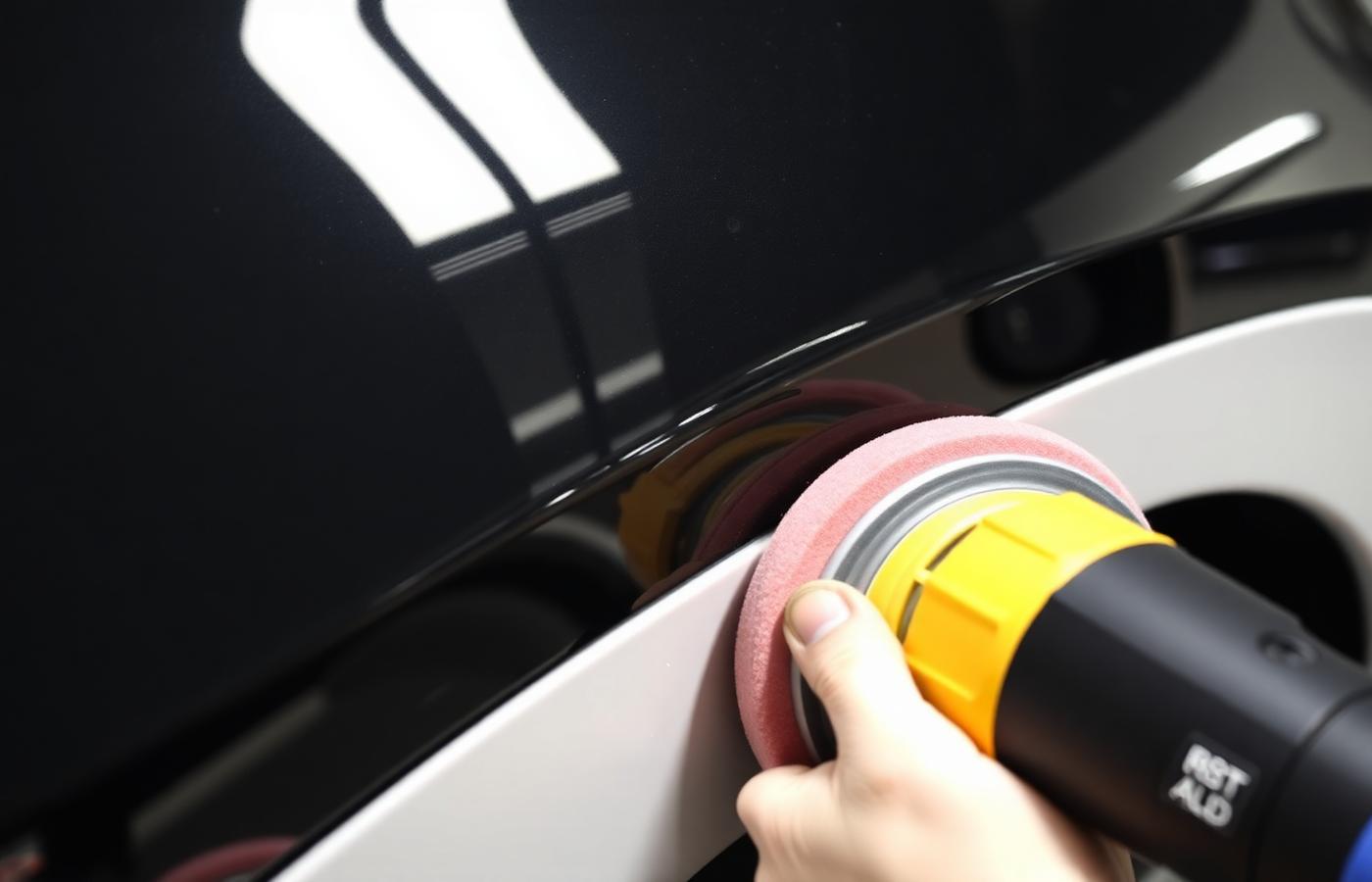
Restoration is progressive wet sanding: the degraded coating and the oxidized surface layer are removed with successively finer abrasives, then the lens is machine polished back to optical clarity. That part is straightforward.
The step that matters is what goes on afterwards. A bare, freshly sanded polycarbonate lens has no UV protection at all and will yellow again faster than the original did — often within months in this climate. A proper restoration finishes with a durable UV-resistant coating. This is precisely why hardware-store kits and quick polish-only jobs look great for a season and then fail.
When restoration is not the answer
Some failures are internal. Moisture inside the housing, a cracked lens, delaminated reflectors or condensation that returns after drying are housing problems, and no amount of external work fixes them. Deep pitting from gravel on lenses that have covered a lot of highway miles can be improved but not made perfect.
Common questions
- How long does headlight restoration last?
With a proper UV protective layer applied afterwards, typically a couple of years or more depending on how the vehicle is parked. Polish-only jobs commonly regress within months here.
- Can both headlights be done if only one is bad?
They are done as a pair. Restoring one leaves an obvious mismatch, and the second lens is usually not far behind anyway.
- Will it pass a state inspection afterwards?
Restoration improves clarity and light output, but we cannot speak for an inspector's judgment on a specific vehicle. Severely damaged or moisture-filled housings may still need replacement.
Related pages
Book headlight restoration in San Antonio
We come to your home, apartment or workplace anywhere in the San Antonio area.