Paint Correction vs Polishing
The terms overlap enough to confuse quotes. The real distinction is how much clear coat is being removed and how permanent the result is.
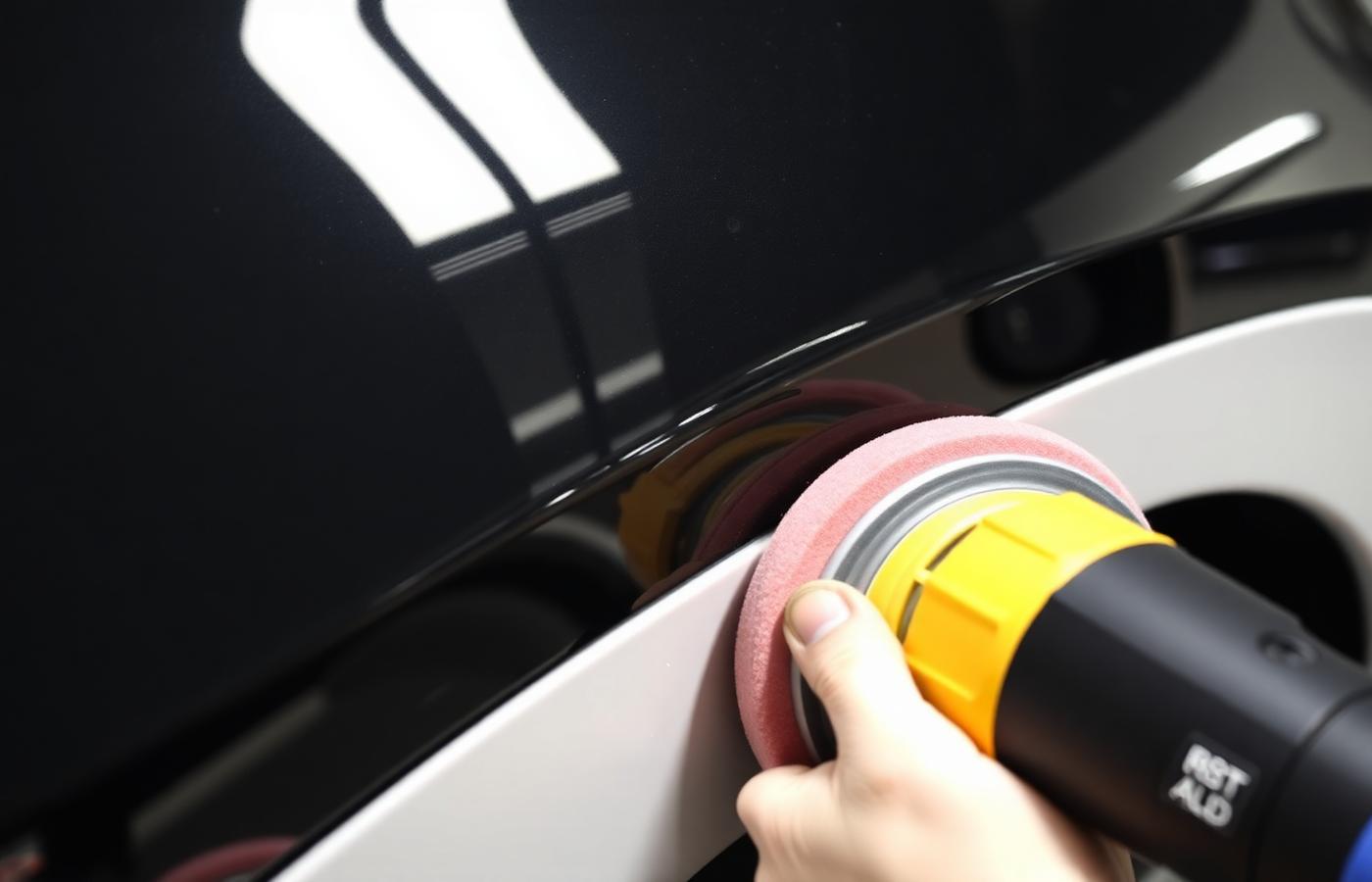
Polishing is the technique
Polishing means using an abrasive with a machine to remove a microscopic amount of clear coat, levelling the surface so light reflects evenly. Every correction is polishing. Not every polish is a correction — the word is also used for light glaze work that fills rather than removes.
The distinction that matters to you is permanence. Removing defects is permanent. Filling them with a glaze or a filler-heavy product looks identical on the day and disappears after a few washes.
One-step enhancement
A single pass with a medium abrasive and pad, typically removing sixty to eighty percent of light swirling and improving gloss substantially. It is the best value option for most daily drivers, because the remaining defects are mostly invisible outside of direct sunlight.
This is what most vehicles here actually need after years of automatic washes.
Multi-stage correction
Two or more passes: a cutting stage with a more aggressive abrasive to remove deeper defects, then a refining stage to remove the haze the cutting stage leaves. It approaches defect-free paint and is what a show car or a coating on a high-value vehicle warrants.
It takes days rather than hours, and it removes more clear coat, which is a finite resource. On a vehicle with thin or previously corrected paint, restraint is the professional choice.
What correction cannot fix
- Scratches deep enough to catch a fingernail — those are through the clear coat.
- Rock chips exposing primer or metal.
- Failed or peeling clear coat.
- Etching that has gone through the clear layer.
Choosing sensibly
For a daily driver that will keep collecting light marring, a one-step enhancement plus good protection is the rational choice — you get most of the visual improvement without spending clear coat you cannot replace. Save multi-stage work for vehicles that are garaged, coated and washed carefully.
See paint correction and swirl mark removal for the services themselves.
Common questions
- How many times can paint be corrected?
A limited number. Each pass removes clear coat, and factory clear is thin. A competent detailer measures before cutting aggressively.
- Will correction remove water spot etching?
Light etching, usually yes. Deep etching that has penetrated the clear coat, no.
- Should I correct before coating?
Yes, unless the paint is new. A coating locks in whatever is beneath it for years.
Keep reading
Would you rather we handled it?
We detail vehicles at homes and workplaces across San Antonio, seven days most weeks.